Why Edward Hopper is My Favorite Artist
He captures the human condition like no one else

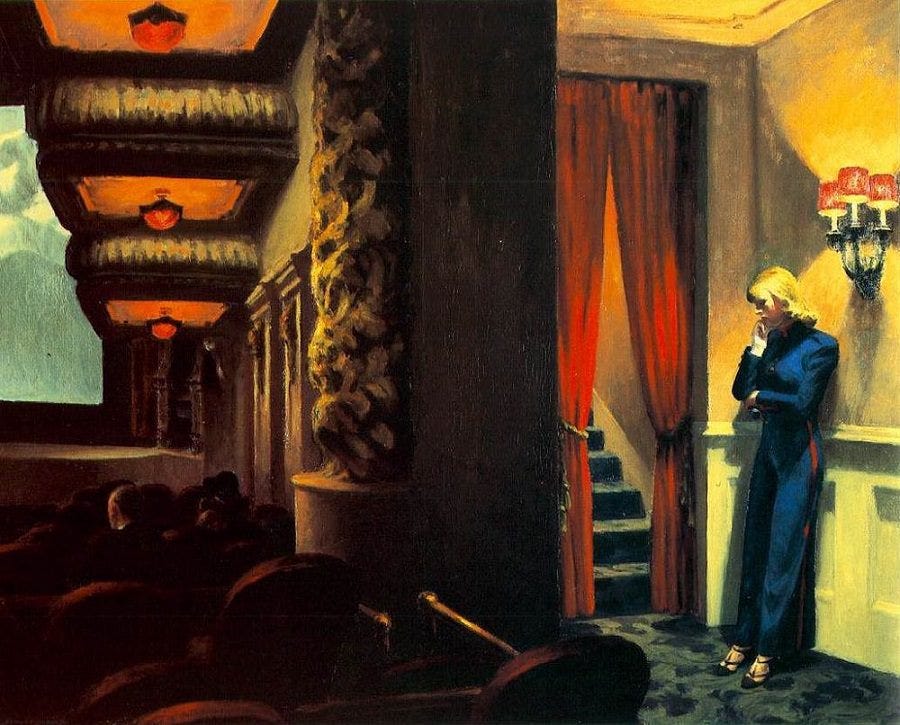
Moments are both meaningful and meaningless due to their transience.
Sometimes I read history books and wonder why the people involved cared so much.
No one alive today spends any amount of time thinking about the French war in Indochina or the Roman invasion of Gaul or the Financial Panic of 1893.
But the people involved at the time were completely consumed by these events.
From the point of view of someone experiencing the great moments of history as nothing more than words on a page, all the grief that the people went through at the time seems so pointless.
It’s all just water under the bridge on a long enough timescale.
But then there’s another part of me that gets it.
Maybe the very strength of humanity is our ability to project importance onto something that’s inherently ephemeral.
An all-consuming focus on the present moment can be an act of defiance against the inherent meaninglessness of it all.
Because at the end of the day we’re all just dust in the wind.
And maybe future generations (or even ourselves a few short years or months or days from now) will not care about anything we do today, but right here, right now, we’re doing it. And that’s why it matters.
Take a look at New York Restaurant by Edward Hopper:
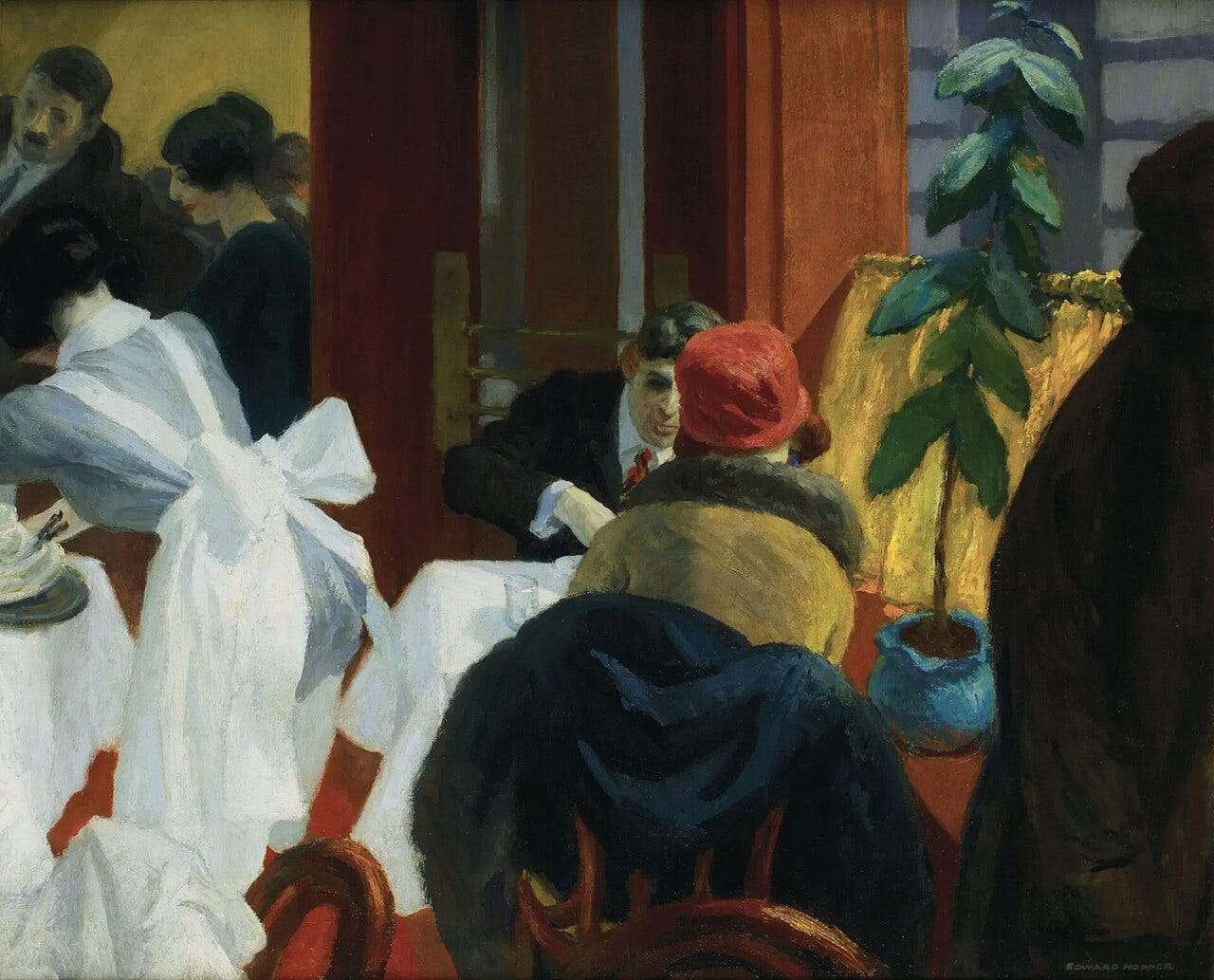
A restaurant is inherently a liminal place.
You enter, you sit down, you eat, you have a conversation, you pay the bill, you leave.
Then other people do the same thing, at the exact same table, over and over and over again.
A revolving door of humanity.
If you think about it too much, it almost feels pointless to leave the house.
The moment that the couple in the painting are sharing feels both transient and meaningful.
You don’t know what they’re talking about, but it doesn’t matter.
The fact that they think it matters is what gives the moment meaning.
There’s a melancholy feel to the painting, because as the people observing the scene we know intuitively that it doesn’t have any significance in the grand scheme of things.
It’s just another day in a restaurant. The next day will look the same as did the day before it. But to the two of them, what they’re experiencing matters because they’re experiencing it.
We see two people smiling in the background.
What are they talking about?
It doesn’t matter, because on a long enough time scale they will be dead.
And on an even shorter timescale, they won’t even remember what they were talking about or that they even had a conversation at this restaurant to begin with.
But in the moment they’re happy.
We see the back of a worker toiling away.
In her mind her work is part of the grand struggle of her life. She needs the money to live, and that’s why the work matters.
But to everyone else (including us) she’s just background noise. Her unpaid bills, the kids she’s trying to take care of, her looming rent payment; none of it even crosses our mind.
And when she dies her struggle will mean nothing to her either.
But in the moment, to her, it’s everything.
I often think about this about my day-to-day life.
Events that I attend, conversations I have, moods I experience.
I view them as the temporary moments they are before they even end.
And that in turn makes me appreciate the true significance of them.
Not in a grand cosmic scale (I’m not arrogant enough to believe I’m that important), but as an assertion of the fact that, in this moment, I’m real.
The very fact that my senses are able to take in the sights and sounds of this moment is proof that I exist.
One day I won’t. But today I’m here.
I perceive, therefore I am.
That’s why the fleeting moments in your life matter, and why, like the scenes in Edward Hopper’s paintings, they simultaneously feel so melancholy.
Now look at Hopper’s Hotel lobby painting:
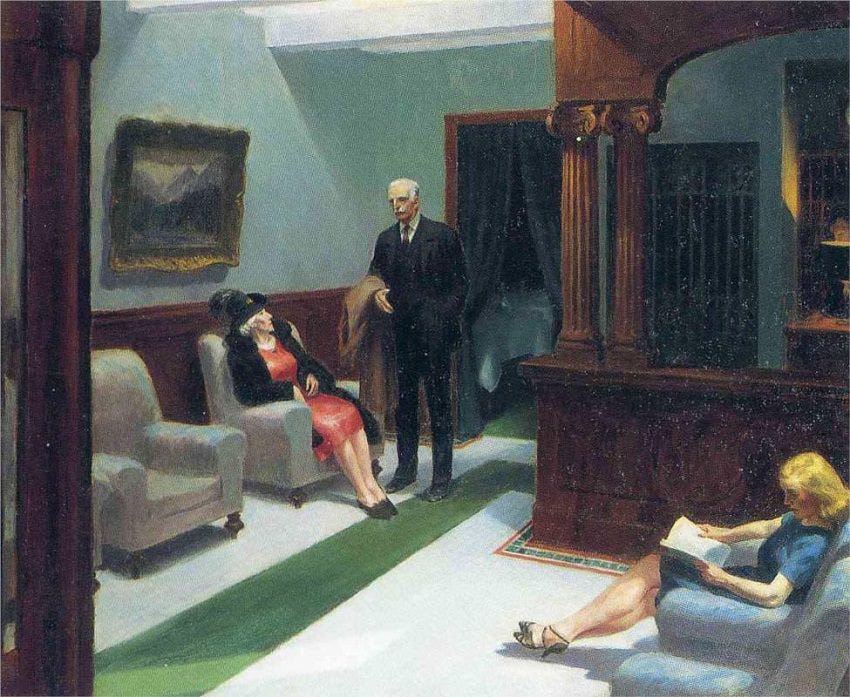
This painting is about the sadness of people asserting their own dignity against a backdrop of indignity.
The hotel is clearly a dump.
Yet the elderly couple are dressed to the nines in a way that you’d expect to see in a five-star hotel lobby.
The moment is even sadder when you look at their age: their situation will never improve because there simply isn’t enough time.
All they have are their clothes and their vision of themselves, and no one notices, which is symbolized by the blonde woman reading a book without so much as glancing in their direction.
They want to be viewed as admirable and respectable, but their attempts to do some only make them seem more pathetic.
We’ve all met people who simply can’t perceive themselves accurately.
Like a kid in school whose attempts to act cool just make him seem like more of a nerd, or the swagger of a young guy trying to act tough in a way that just makes it obvious how scared of the world he really is.
The moment captured in Chop Suey is interesting as well.
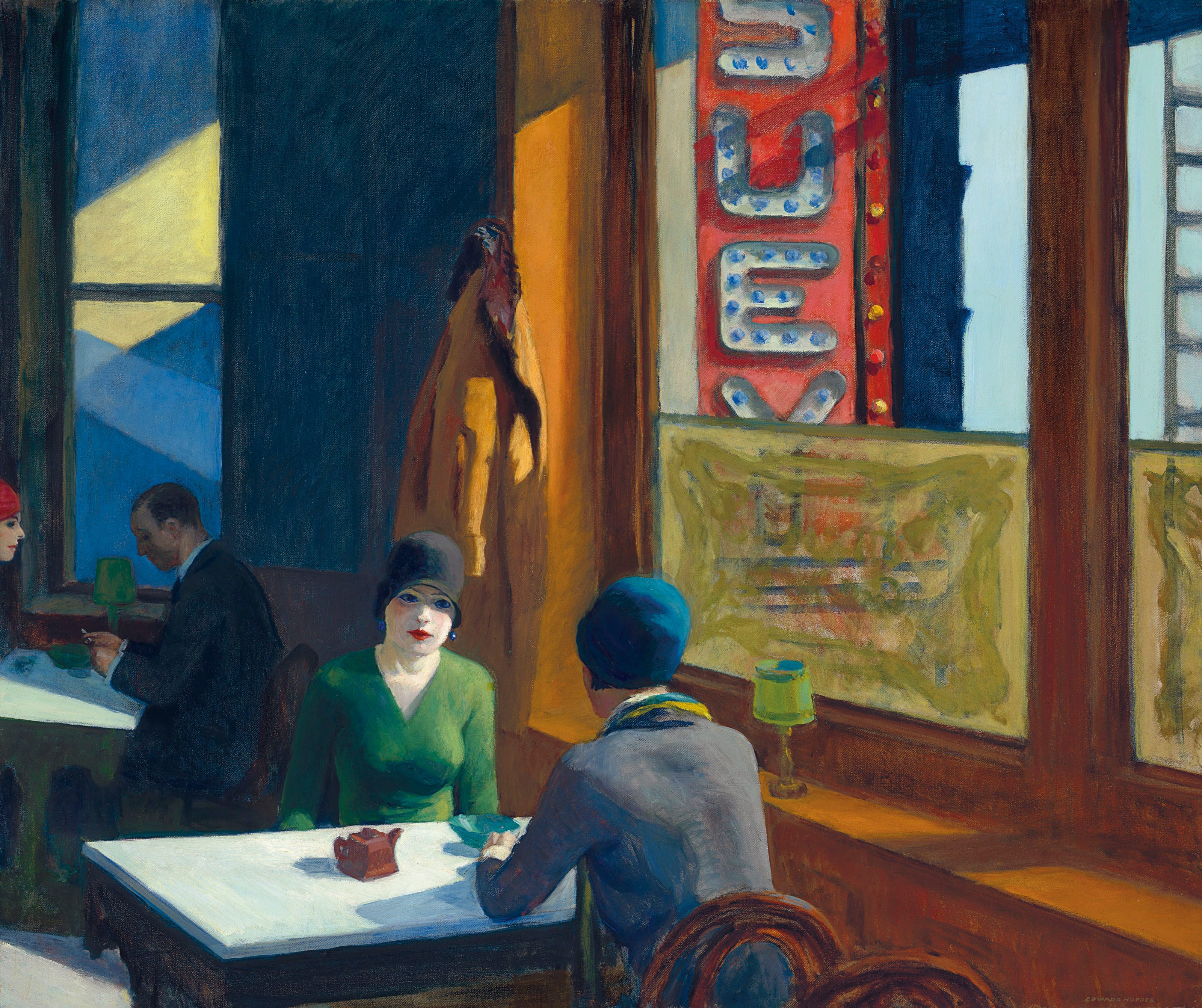
To me it captures those moments when existential terror hits you out of the blue.
You can be in the middle of a conversation at a cafe and then all of a sudden you stare off into space while you think about the fact that you’re going to die and everyone you know is going to die and 500 years from now no one will know or care about anything that you or anyone else currently living did, thought, or said because the time we live in isn’t special in any way it’s not the end of history it’s just a random time in the middle and future generations will think about us precisely as much as we think about what people were doing in the year 1587 aka not at all and when it comes down to it you’re really nothing more than a walking, talking skeleton who’s just waiting for your heart to stop beating so you can degrade into bones and dust which is how you’ll spend the rest of eternity with no hope of ever coming back to the realm of the living.
Then you snap back to the present moment: “Sorry, I was spacing out for a bit, what did you just say?”
The sounds of dishes clinking and the voice of the person you’re talking to bring you back to the time and place you’re currently in and you blissfully forget about the true nature of reality…
The majority of people are human zombies/NPCs coasting through life. They have no insights, no deep thoughts. Just empty shells who are born, live, and die without leaving anything behind.
But there are rare souls among us who are born with the ability to see things others don’t. They see the world for what it is, stripped of all its illusions and distractions and rationalizations. This type experiences untold mental anguish, but also perceives beauty that others can’t even fathom.
Within that rarified group there’s another peeling off, a smaller group of people who can not only see the things but actually translate them for the rest of us in a way that we can understand, so that we can see the world the way they do.
Those people are called artists.
And Edward Hopper is one of the best.
I mean who among us hasn’t felt like the girl in this painting at some point in our lives?
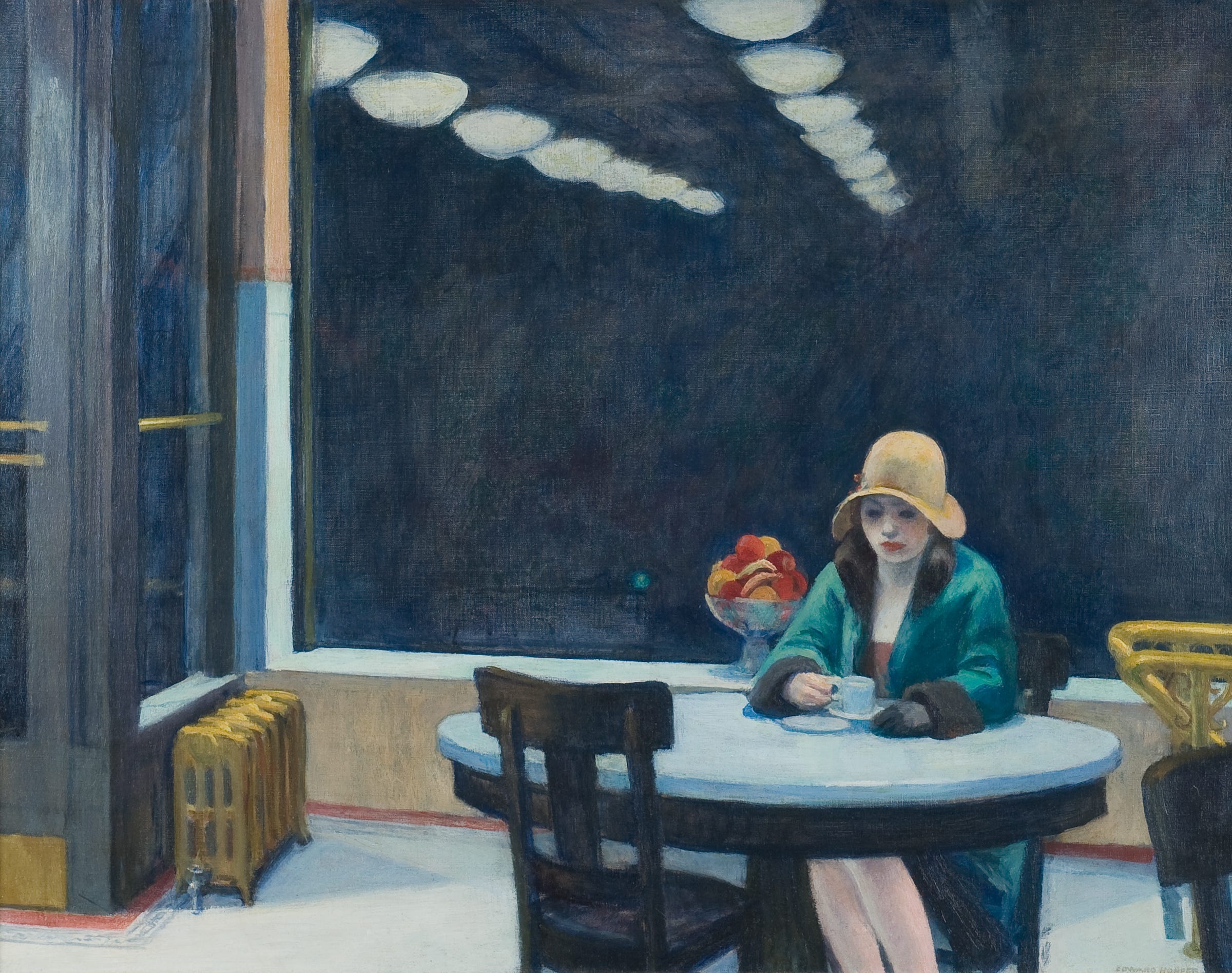
I could write about the Hopps all day but I’ll leave it there for now.
If you enjoy my writing you can also read my novel Your Life Does Not Exist, available in both physical and ebook editions.